If your data center is being asked to “make room for AI,” the real question is usually: can your cooling keep up?
High-density GPUs and accelerators are pushing rack densities into territory that traditional air cooling was never designed for. At the same time, cooling already represents close to 40% of total data center energy consumption, which means every efficiency gain in cooling has an outsized impact on your PUE and operating costs. Boyd | Trusted Innovation
This is why operators, hyperscalers, and colocation providers are accelerating their move toward liquid cooling and why liquid cooling management is becoming a strategic function, not a side project.

Why Air Cooling Alone Hits a Wall with AI
AI and HPC nodes aren’t just “a bit hotter” than legacy servers; their thermal design power (TDP) can be several times higher. Newer AI accelerators can exceed 700 W per chip, with multiple accelerators per server. ashrae.org
That creates several operational problems:
- Rack density limits: Air-only cooling forces you to spread workloads across more racks, consuming white space you don’t have.
- Hot spots and thermal risk: Even if average room temperatures are in range, local hot spots around AI racks can shorten equipment life or trigger throttling.
- Escalating energy bills: With cooling often accounting for up to 40% of total facility energy, inefficient air paths directly erode your margins. Boyd | Trusted Innovation
- Grid and capacity constraints: Many operators simply can’t bring in enough additional power to support “more air” and “more fans.”
Industry forecasts reflect this shift: the U.S. data center liquid cooling market is projected to grow at more than 20% CAGR in the second half of this decade, driven heavily by AI and other high-density workloads. Grand View Research
What “Liquid Cooling Management” Actually Means
Liquid cooling is not a single technology. It’s a spectrum of approaches that must be designed, installed, monitored, and ultimately decommissioned safely. Common options include:
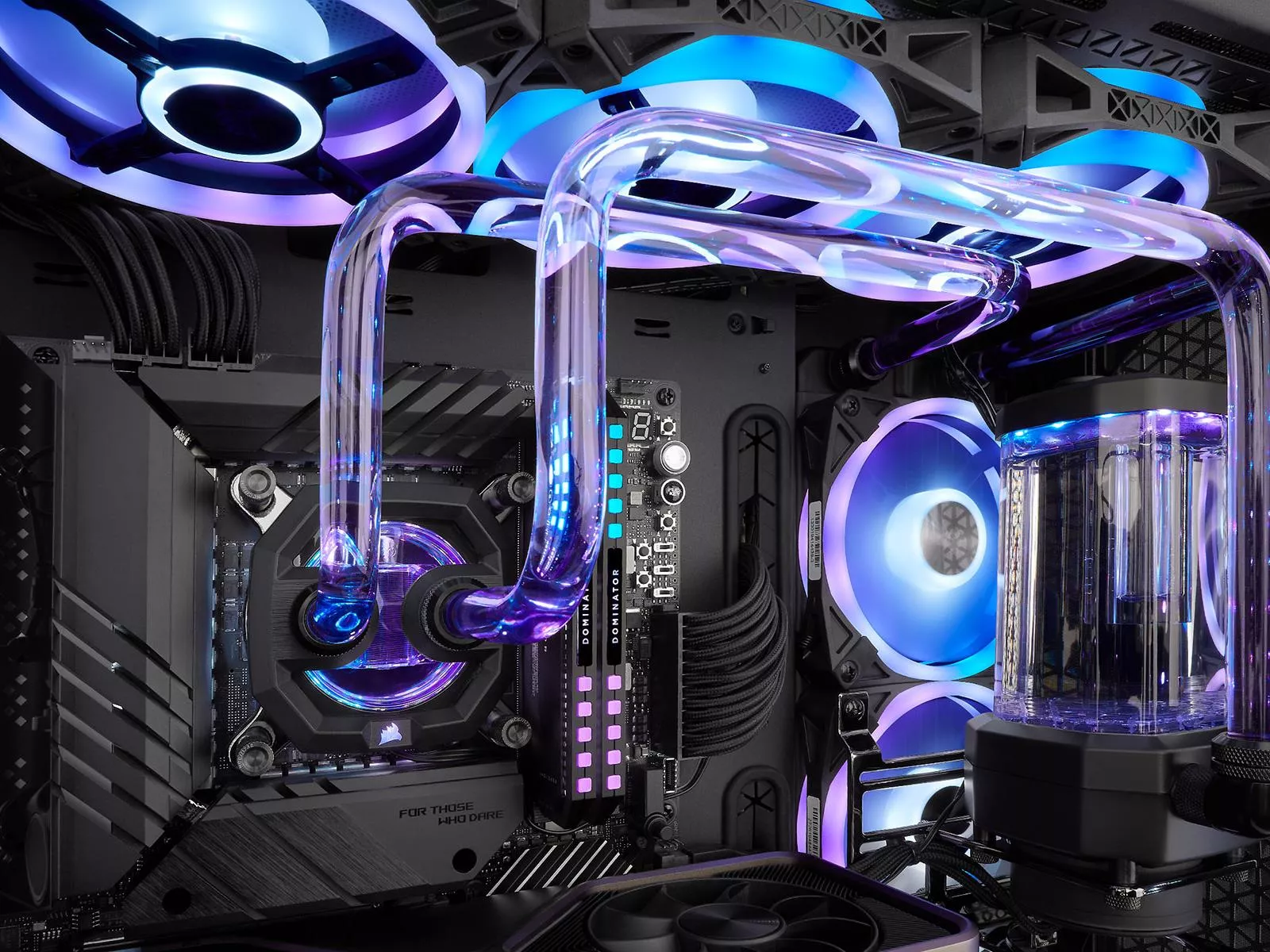
- Direct-to-chip (D2C) loops: Coolant circulated through cold plates mounted directly on CPUs/GPUs.
- Rear-door heat exchangers (RDHx): Liquid-cooled doors mounted on racks to remove heat from exhaust air.
- Immersion cooling: Full or partial immersion of IT hardware in dielectric fluids.
On top of these hardware choices, you also have:
- Facility water systems and manifolds
- Leak detection and containment
- Fluid handling, storage, and disposal
- Operational procedures and training
Liquid cooling management is the discipline of tying all of that together: from planning and deployment through day-to-day operation, maintenance, incident response, and end-of-life.
Guardian’s role in this ecosystem is to help data center operators, ITADs, VARs, and MSPs implement, operate, and ultimately retire liquid-cooled environments safely and compliantly across the U.S., just as you already rely on Guardian to manage data destruction and data center services nationwide. guardiandatadestruction.com
The Business Case: Why Teams Are Moving Now
Beyond “it runs cooler,” liquid cooling delivers tangible business benefits when managed properly:
- Higher density in the same footprint
Liquid cooling lets you deploy AI and HPC racks at densities that would be impractical, or impossible, with air alone. That means more compute per square foot and better utilization of existing facilities. - Lower energy use per unit of compute
Studies show that, when implemented well, liquid cooling can reduce cooling energy consumption by more than a quarter compared to traditional air-cooled designs. McKinsey & Company+1
In an environment where cooling may already be ~40% of your load, those savings cascade into significantly better PUE and lower operating costs. Boyd | Trusted Innovation+1 - Improved reliability and performance headroom
Tighter temperature control around chips reduces thermal cycling and the risk of throttling during peak AI workloads. Combined with robust design practices (including newer ASHRAE guidelines for liquid cooling), this can reduce the probability of thermally driven incidents. ashrae.org+1 - Sustainability and ESG alignment
Many operators are under pressure to meet internal and external targets on emissions and energy efficiency. Lower cooling overhead, more efficient use of power, and the ability to reclaim waste heat all support ESG commitments and stakeholder reporting.
Key Components of a Liquid Cooling Management Program
To get these benefits without introducing new risks, we recommend treating liquid cooling as its own managed service area. A typical program includes:
- Assessment & Design Alignment
- Audit of current racks, workloads, and growth plans (especially AI/HPC).
- Selection of the appropriate liquid cooling technologies (D2C, RDHx, immersion) for each use case.
- Evaluation of existing facility water, floor loading, and redundancy requirements.
- Implementation & Commissioning
- Staging, installation, and integration with existing power and monitoring systems.
- Fluid management planning: storage, makeup fluid, filtration, and compatible materials.
- Commissioning procedures, documentation, and runbooks for operations.
- Run-State Operations & Maintenance
- Regular inspections for connections, hoses, fittings, and manifolds.
- Leak detection monitoring and response playbooks.
- Scheduled maintenance for pumps, heat exchangers, and filters.
- Integration with your broader data center maintenance windows and incident workflows.
- Lifecycle & Decommissioning
- Safe draining, capture, and certified handling/disposal of fluids.
- Removal or repurposing of cooling components and racks.
- Chain-of-custody and documentation to support compliance and ESG reporting.
Guardian already supports these lifecycle phases across data center services nationwide. Extending that discipline to liquid cooling management helps ensure nothing is left to chance from the first AI rack you deploy in a legacy room through multi-site rollouts. guardian-locations
Practical Steps to Get Started
If your team is considering, or being pushed toward, liquid cooling, here is a practical starting checklist:
- Clarify your AI/HPC roadmap
Define how many racks, at what densities, and over what timeframe, so cooling plans align with real requirements. - Identify candidate rooms and sites
Not every facility is equally suited for a first liquid cooling deployment. Start where you have the best combination of power, space, and risk tolerance. - Engage a specialist partner
Work with a partner that understands both data center operations and the realities of field implementation, including staging, logistics, risk management, and eventual retirement of equipment. That’s where Guardian comes in. - Build a liquid cooling playbook
Document standards, processes, and responsibilities across your organization and partners. Treat liquid cooling as a standardized service, not a one-off project. - Think ahead to end-of-life
Plan today for how fluids, racks, and related components will be decommissioned, transported, and processed securely and sustainably when they are replaced or upgraded.
Where Guardian Fits
Guardian can help your organization:
- Plan liquid cooling rollouts that align with enterprise migration and decommissioning projects.
- Implement and coordinate on-site services across multiple locations using our national footprint. guardiandatadestruction.com
- Manage risk around fluids, logistics, and decommissioning, integrated with your ITAD and VAR programs.
- Document and report what’s happening to equipment and materials at each step, supporting your compliance and ESG reporting.
Liquid cooling isn’t just a new type of hardware. It’s a new operational reality. With the right liquid cooling management approach, you can support AI and high-density workloads while protecting uptime, budgets, and sustainability goals.
What rack densities or AI workloads are pushing you to rethink cooling in your data centers right now?