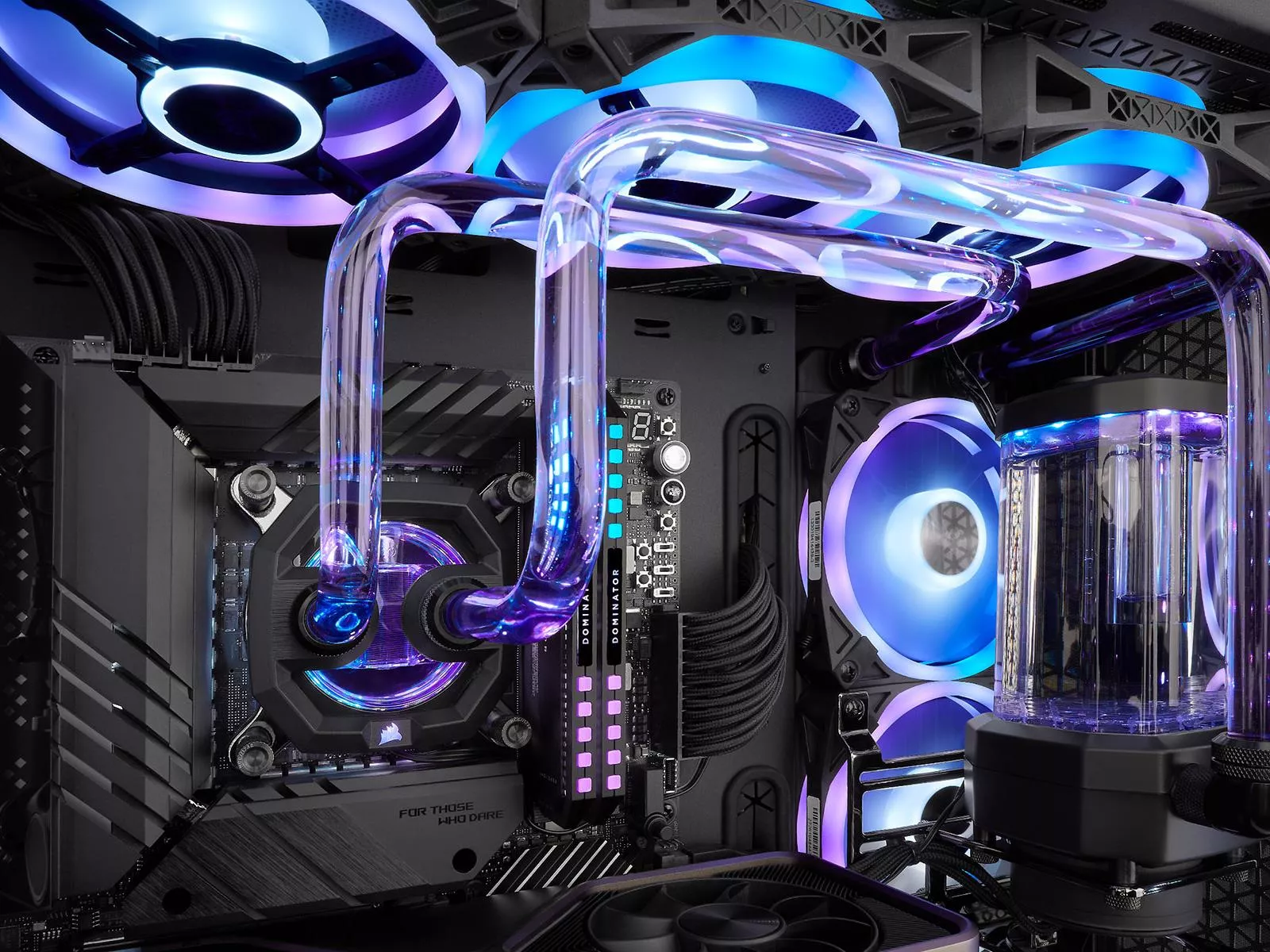
AI and high-performance computing (HPC) are rewriting the rules of data center design. Power densities that used to look exotic are now table stakes, and traditional air-cooled white space is hitting a hard ceiling. It’s no surprise that global data center liquid cooling revenue is already measured in the billions and projected to grow at 20–30%+ CAGR over the next decade.
Analysts estimate the global data center liquid cooling market at roughly $5–6 billion in 2024, with projections ranging anywhere from $17–48 billion by 2030–2034, depending on methodology. At the same time, industry surveys consistently show cooling systems can consume up to 40% of total data center energy, making thermal strategy a board-level concern in an era of rising power prices and ESG scrutiny.
Liquid cooling is no longer a lab experiment—it’s becoming core infrastructure for AI and HPC workloads. But there’s a gap: most organizations have a hardware roadmap, not a management roadmap.
This is where “liquid cooling management” becomes a distinct discipline, not just a line item on the MEP drawings.
Why AI Is Forcing the Move to Liquid Cooling
Modern AI accelerators routinely exceed 700–1000W per device, with multi-kW nodes becoming common. Traditional air cooling can’t efficiently pull that heat out of dense racks without driving PUE, noise, and hot spots into unacceptable territory.
Recent market and operator surveys point to several converging trends:
- Liquid cooling adoption is accelerating. Some forecasts suggest around 40% of data centers will adopt some form of liquid cooling by 2026, driven heavily by AI and HPC workloads.
- Direct liquid cooling (DLC) is maturing fast. Uptime Institute’s latest cooling survey data (as summarized by industry reporting) indicates nearly 60% of enterprise adopters run DLC across 20% or more of their racks—no longer a small pilot footprint.
- Vendors and investors are repositioning around liquid. Thermal and power players are making billion-dollar bets on liquid cooling portfolios and services as AI reshapes demand.
The message for operators is clear: to stay relevant for AI and HPC workloads, you need a path to higher-density racks—and that path almost certainly includes liquid.
The Problem: Hardware Deployed, but No Management Plan
When teams talk about “moving to liquid,” most of the attention goes to:
- Which technology (cold plate, rear-door, immersion, two-phase)?
- What’s the CapEx delta vs. traditional air?
- How does this fit existing chiller, CDU, and piping infrastructure?
All important questions—but they miss the operational reality. Once the equipment is installed and the project team leaves, someone has to own the lifecycle management of that liquid environment.
Without a clear management framework, we see recurring issues:
- Ambiguity on responsibilities between colos, OEMs, integrators, and end customers.
- Gaps in documentation around valves, loops, and leak mitigation procedures.
- Unclear ESG and compliance story around water chemistry, glycol, and disposal.
- Fragmented chain of custody when AI infrastructure is decommissioned, relocated, or remarketed.
That last point is especially critical for ITAD providers, VARs, and MSPs: if you’re responsible for end-of-life or redeployment, you’re stepping into a liquid-cooled environment whether or not you designed it.
What “Liquid Cooling Management” Should Cover
Liquid cooling management is the operational layer that sits between design and day-to-day reality. In a mature program, it typically includes:
- Lifecycle Planning for Liquid-Cooled Assets
- Mapping which racks, rows, and nodes are liquid-cooled today—and what densities you’re planning for over the next 12–36 months.
- Coordinating with ITAD and VAR partners so refresh, migration, and decom plans account for liquid loops, not just power and space.
- Standards-Driven Thermal Strategy
- Aligning operational envelopes with ASHRAE guidance and vendor specs to avoid “self-imposed” overcooling and wasted energy.
- Defining clear policies for inlet temps, water quality, leak detection thresholds, and alarm response.
- Integrated Project Execution
- Treating liquid cooling as part of a single project scope that includes logistics, data destruction, decommissioning, and packing—not as a siloed mechanical task.
- Ensuring field teams have procedures for safe draining, capping, and moving DLC or immersion hardware across sites.
- Compliance, Reporting & ESG
- Documenting handling and disposal for fluids in line with corporate ESG goals and regulatory expectations.
- Integrating liquid cooling considerations into certifications, chain-of-custody documentation, and customer-facing reports.
- End-of-Life Strategy for AI & HPC Infrastructure
- Planning ahead for how liquid-cooled nodes will be audited, data-sanitized, and removed at scale.
- Making sure white-glove logistics, R2v3-compliant recycling, and secure data destruction are baked into the playbook—not bolted on at the end.
How Guardian Fits: Execution Partner for Liquid Cooling Management
Liquid cooling management isn’t just a design challenge—it’s an operational discipline that lives and dies on execution in live data centers. That’s exactly where Guardian’s LiquidCare Onsite Thermal Management program fits.
Instead of treating liquid cooling as a “one-off” project, Guardian delivers a full fluid lifecycle service around AI and HPC environments so operators, OEMs, and channel partners can adopt liquid at scale with confidence.
1. Onsite Fluid Testing & Analysis
Guardian technicians extract samples safely from direct liquid cooling (DLC) and immersion systems and test them onsite for key metrics like pH and conductivity, providing instant, actionable results at the rack. When deeper analysis is required, samples are sent through an independent, certified global lab network that validates fluid integrity across a comprehensive set of data points and returns reports in tight SLAs.
- Safe, procedure-driven sample extraction from live systems
- Rapid onsite readings for pH and conductivity
- Lab analysis via trusted partners across EMEA, APAC, and the Americas
2. Corrective Maintenance, Mobile Filtration & Flushes
Guardian doesn’t stop at testing. LiquidCare teams also perform corrective maintenance to restore and stabilize cooling performance:
- Active filtration to remove contaminants and extend fluid life
- Boosters and top-offs to bring glycol and additive levels back into spec
- Full system flush and drain capabilities for changeouts or hardware transitions
- Compliant fluid disposal and recycling aligned with ESG and regulatory expectations
Mobile filtration and flush units are deployed where the racks are—whether that’s a hyperscale campus, an enterprise data center, or a regional colo site.
3. Global Reach, Local Execution
Guardian is “where you are.” A dedicated US fleet supports nationwide onsite thermal management, backed by a global network of service and lab partners for organizations that operate across regions. That means one execution framework, one standard of safety, and one reporting model—no matter which facility you’re in.
4. Industry-Leading SOPs & Safety
LiquidCare SOPs are written by data center technicians for data center technicians—not by theorists. They’re built to be:
- Hardware-aware: procedures are tuned to real-world variations in liquid cooling hardware, fittings, and manifolds.
- Scalable and trainable: simple to deploy and teach to new teams, so partners can ramp quickly.
- Safety-first: leveraging proven practices from Guardian’s decommissioning and logistics work to protect people, infrastructure, and uptime.
Guardian applies the same track-and-trace rigor used in data destruction and asset handling to liquid cooling workflows, maintaining an unbroken chain of custody for every sample and every job.
5. Partner-First, Channel-Centric Model
Guardian is the trusted execution partner behind OEMs, operators, ITAD providers, VARs, and MSPs across North America—and does not go direct to your customers. LiquidCare is designed to:
- Help partners say “yes” to liquid-cooled projects without adding internal headcount
- Protect and enhance partner margins with competitive, channel-friendly pricing
- Deliver a consistent, positive customer experience with reliable, nationwide field teams
Industry recognition (including ITAD Service Provider of the Year) and deep certifications (e.g., NAID AAA and R2v3 downstream alignment) reinforce the trust that partners place in Guardian for high-risk onsite work.
6. Data-Driven Dashboards & Insights
Every test, every visit, every rack becomes structured data. Guardian’s dashboards transform onsite thermal management work into clear, actionable intelligence that partners and operators can use to:
- Spot trends in fluid health and cooling performance
- Plan multi-site maintenance and refresh cycles
- Improve client communication with verified reports and timelines
In practice, that means liquid cooling management becomes measurable—not just “handled.”
When AI and HPC deployments introduce liquid cooling into your environment, Guardian’s LiquidCare program gives you more than technicians—it gives you a repeatable, data-driven liquid cooling management layer that sits underneath your hardware strategy and lets your team (and your customers) scale with confidence.
Practical Next Steps for Operators & Channel Partners
Whether you operate your own facilities or support enterprise customers through an ITAD / VAR / MSP relationship, here’s a simple framework to move from “we’re adding liquid” to “we’re managing liquid”:
- Inventory & Map
- Identify all current and planned liquid-cooled deployments (by rack/row/site) and align that with your AI/HPC roadmap.
- Define Ownership
- Document who owns which parts of the liquid cooling lifecycle: design, operation, maintenance, decom, logistics, and data destruction.
- Align on Standards & Procedures
- Reference ASHRAE guidance and OEM recommendations to set operating envelopes, leak-response playbooks, and maintenance cycles.
- Integrate with ITAD & Decommissioning
- Involve Guardian and your ITAD partners early in AI and liquid cooling planning, so decom, migration, and chain of custody are designed in—not improvised later.
- Measure & Communicate
- Track how liquid-cooled deployments impact energy efficiency, risk, and ESG goals. Bring that data back to customers and internal stakeholders as proof of value.
What rack power densities are you planning for your next AI refresh—and how confident are you that your cooling strategy (air or liquid) can support them?